Rectal bleeding, a new bowel-habit change, anaemia, weight loss, or persistent abdominal pain can require more than symptom treatment. You will be able to distinguish screening from diagnostic colonoscopy, understand how age and personal risk change the recommendation, and prepare for the procedure with fewer surprises.
Key takeaways
- A positive stool blood test requires follow-up colonoscopy.
- Family history can move colonoscopy screening to an earlier age.
- Persistent bleeding, anaemia, diarrhoea, or bowel changes need medical assessment.
- Follow-up depends on bowel preparation, findings, biopsies, and inflammatory disease.
What a Colonoscopy Examines and When Symptoms Make It Diagnostic
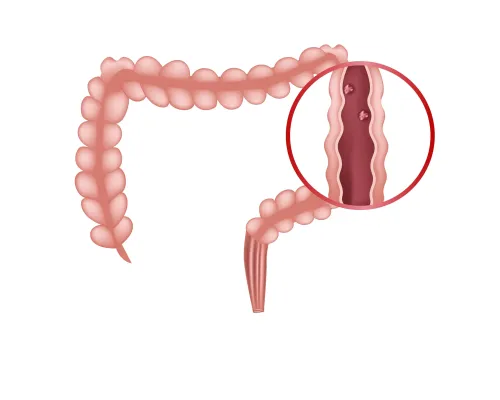
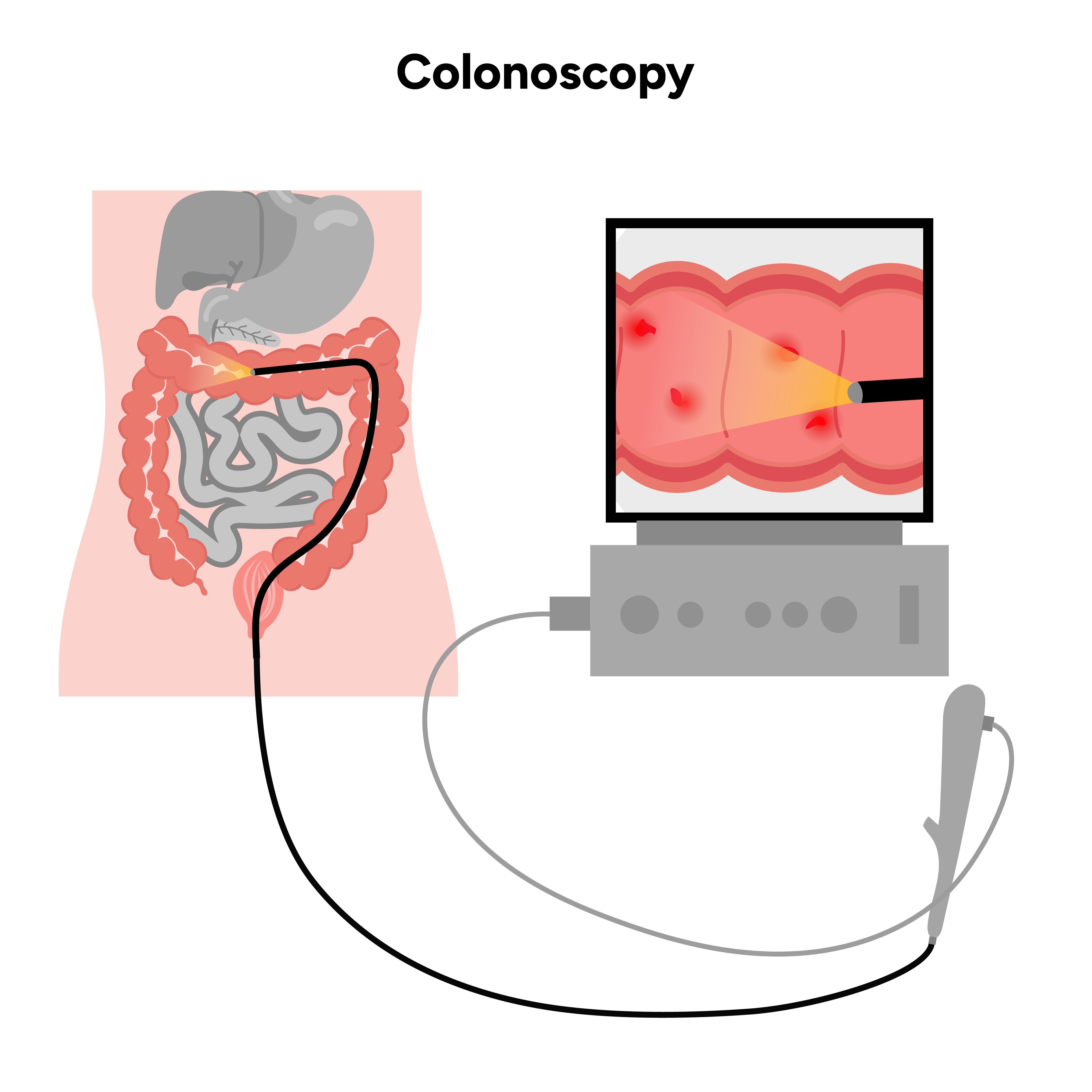
A colonoscopy definition is an examination of the rectum and entire colon using a flexible camera passed through the anus. Sedation is commonly offered, and the clinician can inspect the lining, take tissue samples, and perform biopsy and polyp removal during colonoscopy.
For chronic watery diarrhoea, biopsies from the right and left colon can detect microscopic colitis even when the lining looks normal.
Discuss a diagnostic colonoscopy when you have:
- Visible rectal bleeding or black, maroon, or tarry stool
- Unexplained iron-deficiency anaemia
- Unintentional weight loss
- A persistent change in bowel habit, including ongoing diarrhoea or new constipation
- Persistent abdominal pain
- Suspected inflammatory bowel disease
- An abnormal scan, such as bowel-wall thickening or a suspected mass
- A positive stool-based screening test; repeating the stool test does not complete the evaluation
| Finding | Why colonoscopy may be discussed | What affects the decision |
|---|---|---|
| Bleeding or anaemia | Looks for polyps, cancer, ulcers, or inflammation | Bleeding pattern, age, examination, and blood results |
| Persistent bowel symptoms | Examines the colon and permits biopsies | Duration, severity, stool tests, and other test results |
| Abnormal scan or stool test | Investigates a detected abnormality directly | The specific finding and risk of delayed diagnosis |
Colonoscopy is not the usual first test for one brief episode of gas, abdominal pain, constipation, or diarrhoea in a low-risk person. Poor preparation can hide lesions, and failure to reach the caecum means the entire colon was not assessed; either problem can require an earlier repeat examination.
When Age, Family History, or a Positive Stool Test Calls for Screening
For an asymptomatic adult at average risk, begin colorectal cancer screening at 45. The U.S. Preventive Services Task Force recommends screening through age 75; from 76 to 85, base the decision on overall health, previous screening, and preferences. Average-risk screening does not require colonoscopy as the first or only choice.
| Test | Usual interval | If the result is abnormal |
|---|---|---|
| Colonoscopy | Every 10 years | Remove polyps or investigate cancer during the examination |
| FIT | Every year | Arrange a follow-up colonoscopy |
| Stool DNA test (DNA-FIT) | Every 1–3 years | Arrange a follow-up colonoscopy |
These colorectal cancer risk factors change the plan:
- A family history involving a first-degree relative—parent, sibling, or child—can require screening at 40 or 10 years before that relative’s diagnosis, whichever comes first. Ask about a five-year interval rather than the average ten-year interval.
- Hereditary syndromes such as Lynch syndrome or familial adenomatous polyposis require genetic assessment and substantially earlier, more frequent colonoscopy.
- Previous adenomatous polyps, advanced polyps, or colorectal cancer require surveillance based on the pathology and number of findings, not average-risk timing.
- Long-standing ulcerative colitis or Crohn’s colitis commonly prompts surveillance about eight years after disease onset, with examinations every 1–3 years when inflammation, dysplasia, strictures, primary sclerosing cholangitis, or family history raises risk.
- A positive FIT or stool DNA test is not cleared by repeating it; complete the recommended colonoscopy.
How Doctors Choose Colonoscopy for Constipation, Diarrhoea, Anaemia, and Inflammation
Colonoscopy is appropriate when bowel symptoms persist, an alarm feature appears, or blood, stool, or imaging results suggest structural or inflammatory disease. For brief, mild symptoms in a low-risk person, history, examination, and targeted tests come first.
Rectal bleeding, black or maroon stool, unexplained weight loss, persistent abdominal pain, a lasting change in bowel habit, or unexplained iron-deficiency anaemia requires prompt discussion.
| Finding | What comes first | When colonoscopy moves up |
|---|---|---|
| Short-lived constipation or diarrhoea | History, examination, medication review, and selected blood or stool tests | Persistent symptoms or chronic constipation alarm features |
| Irritable bowel syndrome | Clinical assessment and tests directed at warning signs | An irritable bowel syndrome colonoscopy is unnecessary without alarm features, but bleeding, anaemia, weight loss, or a new pattern changes the plan |
| Chronic watery diarrhoea | Stool tests for infection and inflammation | Colonoscopy with chronic watery diarrhoea microscopic colitis biopsies from the right and left colon, even if the lining looks normal |
| Iron-deficiency anaemia | Complete blood count, ferritin, coeliac testing, and medication review | In men and postmenopausal women, unexplained iron-deficiency anaemia often needs bidirectional endoscopy |
Suspected inflammatory bowel disease calls for colonoscopy with ileal intubation when feasible and multiple biopsies from affected and unaffected areas. Limit or avoid it during severe acute colitis because perforation risk rises.
Dr Pravish Ghurde Gastroenterologist can help match the test to symptom duration, examination findings, and laboratory results rather than treating every bowel complaint as a colonoscopy indication.
Related services
Chronic Constipation Treatment Chronic Constipation Treatment Dr. Pravish Ghurde offers expert evaluation and effective treatment for chronic constipation at Platinum Hospital, Mulund, Mumbai. View service → |
Ulcerative Colitis Treatment Ulcerative Colitis Treatment in Mulund, Mumbai by Dr. Pravish Ghurde Dr. View service → |
What to Do Before Colonoscopy and What the Procedure Feels Like
Follow the endoscopy unit’s written instructions exactly: a low-residue diet usually starts before the examination, followed by clear-liquid instructions and a split-dose bowel preparation. Drink only approved clear liquids, such as water, clear broth, or pulp-free apple juice; avoid solid food and red or purple drinks when instructed.
Arrange a medication review, especially for antithrombotic medicines, diabetes treatment, kidney disease, pregnancy, or heart and lung conditions. Never stop a blood thinner without the prescribing clinician’s plan.
- Arrive with an adult escort, your medication list, and relevant medical records. A nurse checks your vital signs and places an intravenous line.
- You change into a gown and receive sedation, which makes you relaxed and sleepy. The flexible camera passes through the anus to examine the colon; you may feel pressure, abdominal cramping, or bloating as air or carbon dioxide is introduced. Biopsies or polyp removal can happen during the same examination.
- Recover in a monitoring area until you are alert enough to leave. Arrange transport after sedation; do not drive, drink alcohol, operate machinery, sign legal documents, or make important decisions for the period specified by your unit, usually the rest of that day.
Mild bloating, gas, and brief cramping are common afterward. Seek urgent medical advice for severe or worsening abdominal pain, a hard swollen abdomen, fever, repeated vomiting, faintness, breathing difficulty, or heavy or persistent rectal bleeding.
How Results, Preparation Quality, and Inflammatory Disease Change Follow-Up
Biopsy results and the pathology of removed polyps set the next interval, not simply the fact that tissue was taken.
One or two small, low-risk adenomas often lead to a 7–10-year interval; three or four small adenomas usually mean 3–5 years; an adenoma at least 10 mm, with villous features or high-grade dysplasia, usually means 3 years. Cancer, incomplete removal, or numerous polyps requires an individual plan.
Poor bowel preparation quality can hide flat or small lesions. If the cecum was not reached, the examination is an incomplete colonoscopy, so repeat it within a year or complete the assessment with another appropriate method sooner.
Post-diverticulitis findings also matter: after an acute episode has settled, colonoscopy is commonly arranged after 6–8 weeks, particularly after complicated diverticulitis, and the result determines the subsequent interval.
Inflammatory bowel disease requires surveillance rather than average-risk screening:
- For colonic ulcerative colitis or Crohn’s disease, begin surveillance about 8 years after disease onset.
- Use a 1–3 years interval according to inflammation, previous findings, and cancer risk.
- Shorten the interval when biopsies show dysplasia, or when there are strictures, primary sclerosing cholangitis, or a strong family history.
Frequently asked questions
What symptoms can make a colonoscopy a diagnostic test?
Doctors may recommend colonoscopy to investigate rectal bleeding, persistent bowel habit changes, unexplained iron-deficiency anaemia, ongoing diarrhoea, abdominal pain, or suspected inflammation.
When does family history affect colonoscopy screening?
A first-degree relative with colorectal cancer or advanced polyps can lead to earlier or more frequent screening. Your doctor uses the relative’s age at diagnosis and the family pattern to set the schedule.
What should you do before a colonoscopy?
Follow the prescribed low-fibre diet and bowel-cleansing plan, drink the stated volume of preparation with clear fluids, and ask which medicines to pause or continue.
How do colonoscopy results change follow-up?
Follow-up depends on whether the colon was fully examined, how clean the bowel was, and whether doctors found polyps, cancer, inflammation, or an inadequate preparation.
Related services
Colorectal Polyps, Lower GI Bleeding & Liver Disease Treatment Colorectal Polyps, Lower GI Bleeding & Liver Disease Treatment Dr. Pravish Ghurde, Consultant Gastroenterologist at Platinum Hospital, Mulund, Mumbai, provides expert diagnosis and advanced treatment for... View service → |
Malabsorption Syndrome Treatment Malabsorption Syndrome Treatment Dr. Pravish Ghurde offers comprehensive diagnosis and effective treatment for malabsorption syndrome at Platinum Hospital, Mulund, Mumbai. View service → |