MASLD vs. MASH: Decoding the New Nomenclature in Liver Health
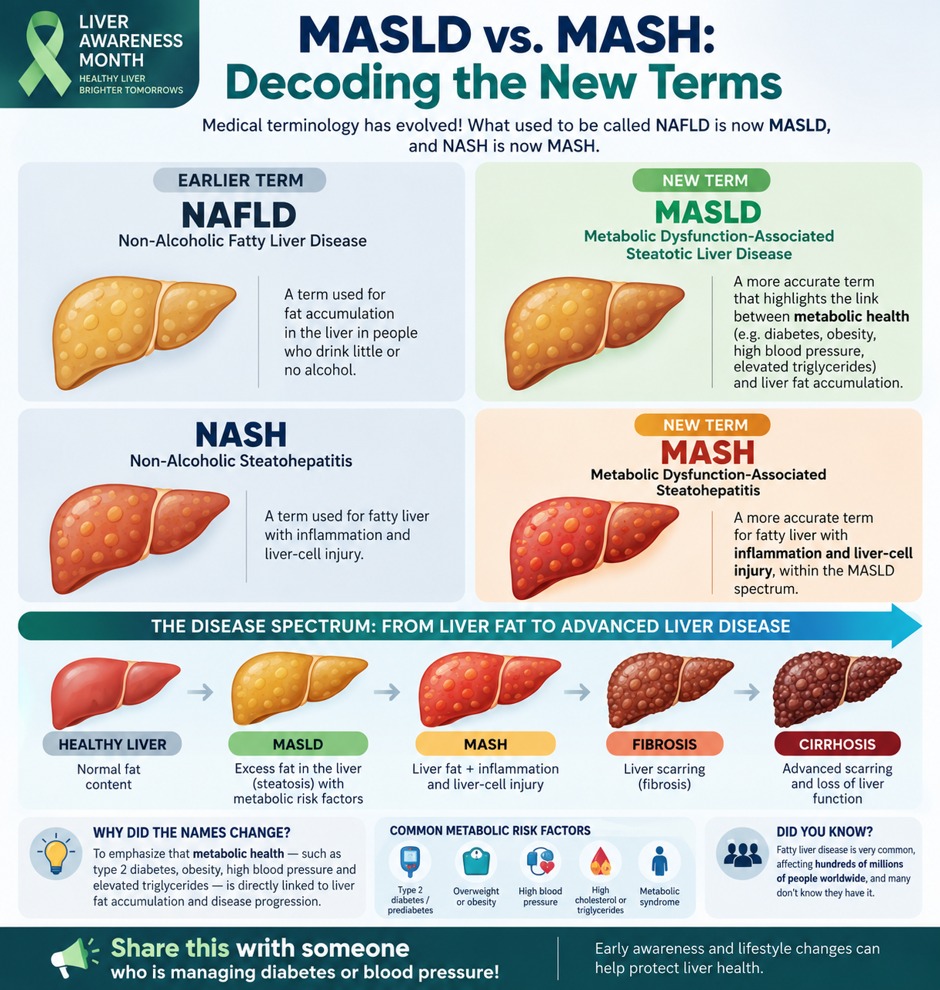
Liver disease nomenclature underwent a major international consensus update to better reflect the underlying drivers of the disease, moving away from stigmatizing and outdated terms.
Key Terminology Updates:
1. NAFLD to MASLD: Non-Alcoholic Fatty Liver Disease (NAFLD) is now Metabolic Dysfunction-Associated Steatotic Liver Disease (MASLD).
2. NASH to MASH: Non-Alcoholic Steatohepatitis (NASH) is now Metabolic Dysfunction-Associated Steatohepatitis (MASH).
Why the Shift Was Necessary
1. Stigma Reduction: The former term "non-alcoholic" relied on exclusion (defining the disease by what it was not rather than what it was) and carried social stigma for patients.
2. Mechanistic Accuracy: The new terms explicitly highlight metabolic dysfunction as the primary driver. Steatotic liver disease is now recognized as a hepatic manifestation of systemic metabolic syndrome.
3. Diagnostic Precision: Under the updated criteria, a diagnosis of MASLD requires both evidence of hepatic steatosis (fatty liver) and at least one of five core cardiometabolic risk factors:
a. Overweight or obesity (body mass index more than 25 kg/m² or waist circumference thresholds).
b. Type 2 diabetes mellitus or impaired glucose tolerance.
c. Hypertension (blood pressure more than 130/85 mmHg or on antihypertensive treatment).
d. Elevated plasma triglycerides (more than 150 mg/dL or on lipid-lowering therapy).
e. Reduced plasma HDL cholesterol (less than 40 mg/dL for men, less than 50 mg/dL for women, or on lipid-lowering therapy).
Clinical Implications and Disease Progression
1. MASLD (Simple Steatosis): Characterized by fat accumulation in the liver without significant inflammation or cellular injury. While less immediately dangerous, it serves as a critical early warning sign for cardiovascular and metabolic morbidity.
2. MASH (Steatohepatitis): Represents a more advanced stage where hepatic fat accumulation is accompanied by active inflammation and hepatocyte ballooning (cell injury), which can progress to fibrosis, cirrhosis, and hepatocellular carcinoma.
Patient Education and Actionable Takeaways
Given that fatty liver disease affects a vast portion of the adult population—often silently—bridging metabolic management with hepatology care is vital. Interventions focus on:
a. Structured weight management and lifestyle modifications (dietary optimization and regular physical activity).
b. Rigorous glycemic control for individuals with type 2 diabetes.
c. Blood pressure and lipid profile management to mitigate both hepatic disease progression and overall cardiovascular risk.
For expert evaluation, personalized metabolic care, and advanced hepatology consultations, visit www.drpravishghurde.com.
Keywords